
How Energy Monitoring Works at EV Charging Stations
2025-11-20 · 5 min read · Nordic IoT
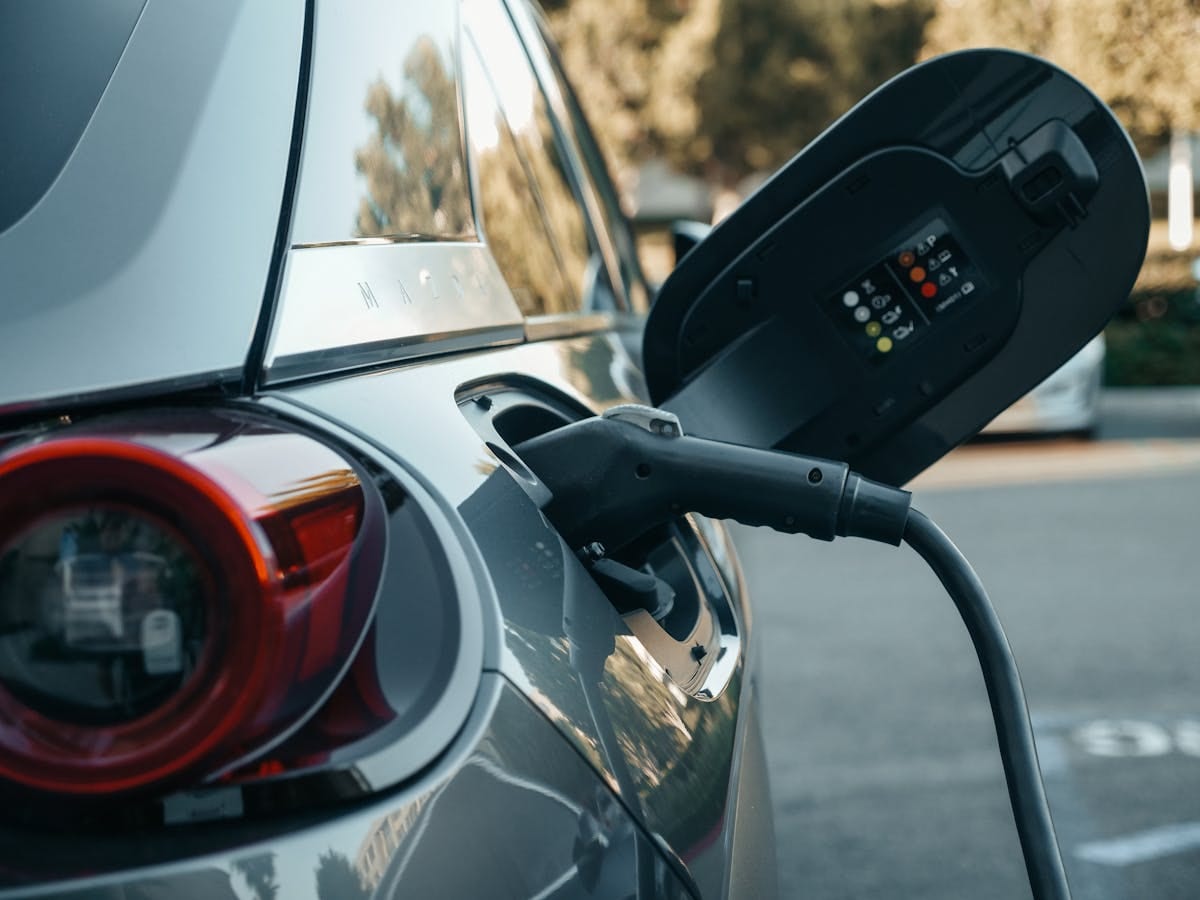
The problem with aggregate energy data
Most EV charging installations measure total power consumption at the main distribution panel. This gives you a single number: how much energy the entire site used. It does not tell you which charger consumed what, how consumption varies by time of day, or whether a specific unit is drawing more power than expected. For operators managing multiple stations or reporting on ESG metrics, aggregate data is not enough.
Session-based measurement solves this by recording energy consumption per charging station, per session. Each charging event becomes a discrete data point with a start time, end time, and total kWh consumed.
Hardware: industrial-grade power meters and Modbus RTU
We deploy industrial-grade DIN-rail power meters from established manufacturers, designed for sub-distribution monitoring. Each unit measures voltage, current, active power, reactive power, and energy (kWh) on up to three phases. Data is exposed via Modbus RTU over RS485, which makes it straightforward to integrate with industrial data gateways.
In a typical EV charging installation, one power meter is installed per charging station or per circuit group. The meters connect via RS485 daisy-chain to a Nordic IoT industrial PC, which acts as the data gateway. The gateway polls each meter at configurable intervals, typically every 5 seconds for real-time dashboards, with 1-minute aggregations stored for historical analysis.
From raw data to operational insight
The Nordic IoT gateway runs our data collection software, which handles:
- Modbus register polling and data validation
- Session detection: correlating power draw start/stop with charging events
- Local buffering when connectivity is interrupted (data is never lost)
- Encrypted transmission to the central platform via the gateway's 4G modem with private APN
- LUKS full-disk encryption on the gateway's NVMe storage
The central platform processes incoming telemetry into dashboards showing real-time consumption per station, historical trends, cost attribution based on energy tariffs, and station comparison views. Operators can identify underperforming chargers, detect anomalies, and generate reports for ESG documentation or facility management.
What this costs and what you get
A typical installation with 6-8 charging stations requires one power meter per station, one Nordic IoT industrial PC as a gateway, and an IoT SIM card for connectivity. Hardware and installation (including panel building by certified Danish electricians) runs approximately 18,000 DKK upfront, plus a monthly monitoring fee for the platform and connectivity. The system pays for itself through better cost attribution, early fault detection, and the operational data needed for informed capacity planning.